

A Foundation Failure Case Study Every Builder Should Learn From
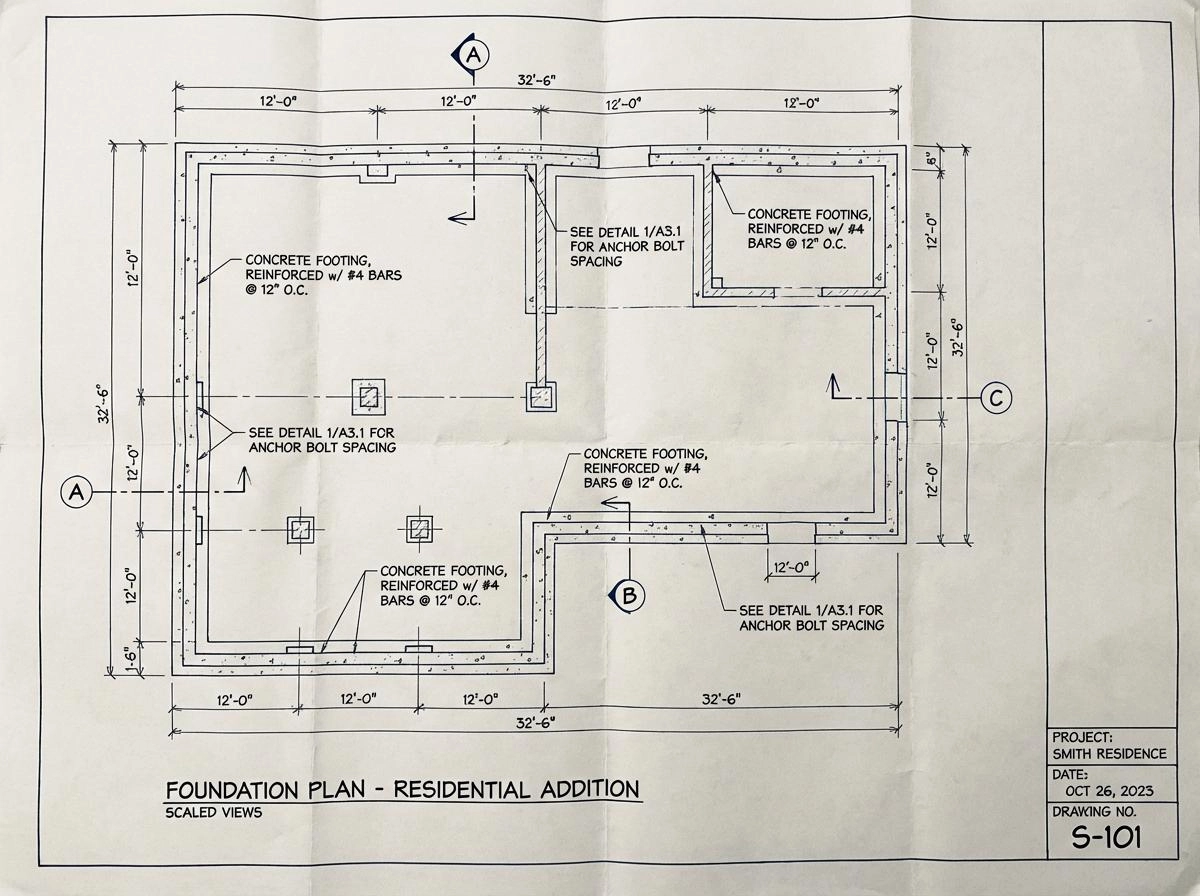
Foundation failures rarely start with cracks.
They start with assumptions.
This case study, drawn from a real engineering failure, is a clear example of what happens when design decisions are made without fully respecting soil conditions, load paths, and long-term performance.
For builders, the lesson is simple.
Most foundation failures are preventable.
But only if risk is addressed before construction begins.
The Project Background
A younger couple built what they believed would be their dream home.
They hired a builder who, in turn, relied on a selected engineering team. The home was designed with a raised wood floor system supported by drilled interior piers, combined with shallow perimeter grade beams.
On paper, the design appeared adequate.
In reality, the soil conditions and foundation system were mismatched from the start.
When the Problems First Appeared
Not long after completion, the homeowners began noticing interior movement.
Doors shifted.
Floors became uneven.
Interior distress became visible in multiple areas of the home.
These were not cosmetic issues.
They were early warning signs of structural movement.
And once foundation movement starts, it rarely stops on its own.
What Went Wrong in the Design
The root cause was not workmanship.
It was design.
The foundation relied on drilled piers for interior support, but perimeter grade beams were left shallow and unsupported by piers. This created a system where different parts of the foundation behaved differently as soil conditions changed.
In expansive soils, mixed foundation systems are dangerous.
When one part of the structure moves and another resists movement, stress transfers into the framing and finishes above. Over time, that stress shows up as damage.
Why Soil Data Matters More Than Preferences
In this case, soil testing showed highly expansive clay.
High plasticity soils expand and contract with moisture changes. That movement must be anticipated and designed for.
Instead, the foundation design did not fully align with the geotechnical recommendations.
When engineering decisions are influenced by cost, preference, or speed rather than soil behavior, risk is baked into the project.
And that risk doesn’t disappear after closing.
The Cost of Fixing It After the Fact
By the time movement became severe, repair options were limited and expensive.
Potential solutions included installing additional interior piers, adding new grade beams, or retrofitting the foundation with helical piles.
Estimated repair costs exceeded $200,000.
That number did not include legal costs, engineering re-evaluations, or homeowner disruption.
Once a home is built, every fix costs exponentially more than doing it right the first time.
Why Builders End Up Carrying the Risk
From a legal standpoint, foundation failures almost always come back to the builder.
Homeowners don’t sue soil.
They don’t sue engineers first.
They sue builders.
Courts view builders as the party responsible for delivering a habitable home, regardless of who made the design decisions.
That’s why foundation failures become profit killers.
Even when insurance responds, defense costs, time, and reputation damage stack quickly.
Lessons Every Builder Should Take From This Case
There are several takeaways builders should internalize.
- Geotechnical recommendations must drive foundation design, not the other way around.
- Mixed foundation systems require extreme caution, especially in expansive soils.
- Value engineering that ignores soil behavior is false savings.
- Documentation matters. When failures occur, builders need clear records showing that design decisions followed professional recommendations.
- Finally, prevention is always cheaper than repair.
Why This Matters Beyond One House
This case isn’t unique.
Similar failures happen every year across the country. What changes is how well builders are protected when they do.
Foundation risk is not just a construction issue.
It’s a legal issue.
A financial issue.
A business survival issue.
Builders who understand this treat foundation design as a profit protection decision, not just an engineering task.
The Bottom Line for Builders
Most foundation failures don’t happen because builders don’t care.
They happen because early warnings are ignored, soil behavior is underestimated, and risk is deferred.
This case study is a reminder that the most expensive problems in homebuilding are usually invisible at the start.
Builders who respect soil data, demand disciplined design, and plan for long-term performance protect more than homes.
They protect their business.