

Winterize Before You Need a Claim: Jobsite Loss Prevention
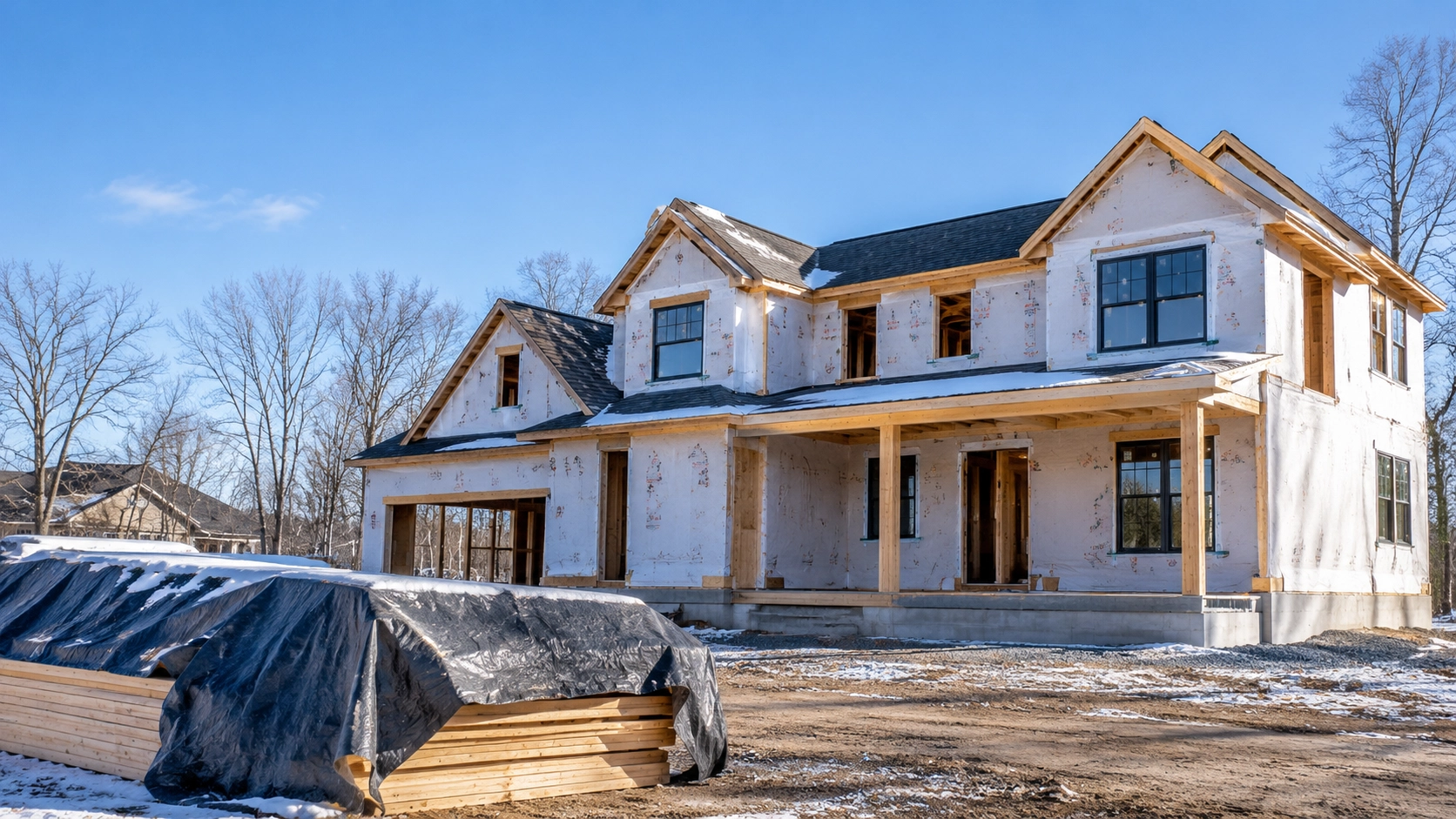
Most winter losses on homes under construction are not bad luck. They are a heater that quit over the weekend, a supply line nobody drained, or a house left unlocked over a holiday. Every one of those can be prevented with a few hours of work this month, before the first hard freeze.
Burst pipes are the leading cause of property damage from winter weather, and water has replaced fire as the leading cause of jobsite loss. Warm-weather markets are not exempt: a single hard freeze can split lines that nobody thought to insulate or drain.
Freeze claims are also some of the hardest to collect. Some builders risk forms exclude freezing damage or make coverage conditional on keeping the building heated or the water shut off, and some policies name a required temperature. A contractor who leaves a building unheated ahead of a forecast hard freeze can find that the policy excludes the resulting loss. Read your policy's freeze language and any protective safeguards endorsement now, not after a loss. If it is unclear, ask your Maverick agent.
The checklist below covers frozen pipes, water shutoff on unoccupied homes, temporary heat, storm prep, theft and vandalism, and jobsite security, followed by what carriers typically want documented if a loss does happen.
1. Freeze protection: keep the heat on or keep the water out
Pipes freeze when water sits in them in an unheated space, so every house needs one of two plans: reliable heat, or no water in the lines. Choose one per house, in writing, before the first hard freeze.
- Assign the plan. Name who is responsible for each house, and for checking it. "Someone will look in" is not a plan.
- If the heat stays on, confirm the minimum temperature with your plumber and your policy. Homeowner guidance commonly puts the floor for an empty house at 55°F, and some policies name a required temperature.
- Get permanent heat running early. Carriers generally prefer the building's own heat source to temporary heaters.
- Close the envelope. Set exterior doors and windows, or cover the openings, and insulate supply lines in exterior walls, attics, crawl spaces and garages. Open vanity and sink cabinet doors on exterior walls so warm air reaches the pipes.
- Handle the outside lines. Disconnect hoses, shut off and drain exterior spigots, and drain irrigation.
- Plan for a power outage. Winter storms often cut power to the heat, and water-filled lines can then freeze and rupture. Decide ahead of time who restores heat and who can reach the main shutoff.
- Add leak sensors with automatic shutoff. Some systems also watch for freezing temperatures. Choose ones that work without site Wi-Fi: some run locally on a pressurized line and a live outlet, and cellular systems keep reporting through outages. Expect the shutoff to trip during normal plumbing work, and train the crew on how to reset it.
- Mark the main shutoff with bright paint or tape, and make sure every superintendent and plumbing sub knows where it is.
If a pipe freezes anyway: open the affected faucet, then thaw the pipe slowly with a hair dryer or heating pad, working from the faucet end back toward the frozen section. Never use a torch or any open flame. If a pipe has split or water is leaking, close the main immediately and call a plumber.
2. Water shutoff protocol for unoccupied homes
A house with no heat and no one in it should have no water in it. If heat cannot be guaranteed through the holiday shutdown, a drain-down is the safer plan. Have a licensed plumber do it or sign off on it, and follow this sequence:
Shut off the main supply (and the curb stop or meter valve where applicable) and tag it.
Cut power or fuel to the water heater and any boiler, then drain them.
Open every faucet, starting at the highest point in the house, and drain from the lowest. Flush toilets and drain the tanks.
Blow out the supply lines with compressed air at a moderate pressure, opening one fixture at a time. Include dishwasher, ice maker and washer supply lines. Air alone can leave water in low spots, so let your plumber judge whether more is needed.
Protect the traps. Pour non-toxic propylene glycol antifreeze (the pink RV or plumbing type) into sink, tub and shower traps, floor drains, and toilet bowls and tanks. Never use automotive antifreeze, which is toxic and does not belong in a plumbing system.
Check for fire sprinklers. If the home has a residential sprinkler system, get the winterization procedure from the sprinkler contractor instead of draining it like domestic plumbing.
Tag it. Post a notice at the main and the water heater: system winterized, do not restore water or power to the water heater. Add a sign at the entry so no one turns things back on by accident.
Photograph it. Capture the closed main, the drained fixtures, the antifreeze in the traps, and the date and name of whoever did the work.
Set an inspection cadence and log each visit. Many policies expect regular checks of an unoccupied home.
When it is time to bring the water back, do it on a weekday morning when someone will be on site to watch for leaks, not on a Friday afternoon.
Finished but unsold spec homes need a second look. Many vacancy clauses exempt buildings under construction, but a completed home that sits empty can fall under vacancy or unoccupancy provisions, and some of those restrict water-damage coverage after a set number of days. Ask your agent what applies once construction ends.
3. Temporary heat without the fire
Temporary heat solves the freeze problem and creates a fire problem if it is set up carelessly. Improperly installed heaters are a common cause of major fire losses on construction projects, and an unfinished house has no drywall, fire stopping or sprinklers to slow a fire down. The most common cause is simple: not enough clearance around the unit.
- Check your policy first. Some policies restrict heater types, so confirm before you rent or buy.
- Keep combustibles well clear. Follow the manufacturer's clearances, and keep lumber, scrap, poly sheeting and house wrap away from the heater. Never stack material near it.
- Match the heater to the job. Use heaters rated for construction use. Never bring an outdoor propane heater indoors. Direct-fired units put combustion gases into the space, so they need fresh-air ventilation and raise carbon monoxide risk. Indirect-fired units reduce both the fire and carbon monoxide risk.
- Store fuel safely. Keep propane cylinders outside and upright, and keep combustible material at least 10 feet from any tank.
- Electric heaters: plug directly into a proper outlet, not an extension cord, and do not overload temporary circuits.
- Keep a fire extinguisher at each heater. Confirm the rating your carrier and local fire code require.
- Inspect daily. Check heaters and ducting for blockages and leaks, and do not leave open-flame units running unattended unless your policy, the manufacturer and the local fire authority all allow it.
- Know the local rules. Many jurisdictions follow NFPA 241 and the fire code's construction-site provisions for temporary heating.
4. Storm prep: roof, openings and power
Winter storms get into unfinished homes three ways: through the roof, through open or temporary openings, and by taking out the power that runs the heat.
- Dry in the roof before the snow. Get underlayment and roof covering on, and install an eave ice barrier where your local code calls for one. Ice dams form when heat loss melts snow that then refreezes at the cold eave, backing meltwater up under the roofing and into the house. Air sealing, insulation and ventilation at the eaves are what prevent them.
- Close the openings. Unfinished window and door openings let in rain, snow and wind. Install windows and exterior doors early, and secure any temporary covers well enough to survive a gust.
- Check the bracing. Before a forecast wind or snow event, inspect temporary bracing on trusses and walls and secure loose materials.
- Respect snow loads. Heavy or drifted snow can overload a roof, and an unfinished roof is not a place for a crew with shovels. Keep people off snow-covered and icy roofs without fall protection, and call the engineer or truss supplier if heavy snow is sitting on a partly framed structure.
- Finish drainage. Complete grading, gutters and downspout discharge so thaw and rain run away from the foundation and stay out of crawl spaces and slabs.
- Protect materials. Drywall, insulation and cabinets should be stored off the ground and covered, or delivered only when the house is enclosed and heated.
- Have a power-loss plan. Know who goes to the site if the heat goes out, and who can close the main.
- Name a storm lead. Pick one person to walk each site before a forecast storm and again afterward.
After the storm: make sure the site is safe before anyone goes in, report any damage to your carrier right away, secure the site against theft, and only then start cleanup.
5. Theft and vandalism
Holiday shutdowns leave houses empty for days at a time, and anything that can be sold for cash is a target. Copper wire and plumbing are among the most frequently stolen materials, vandalism often comes with the theft, and industry sources say less than a quarter of stolen items are ever recovered.
- Deliver just in time. Do not stage copper, fixtures, appliances or tools days before they are needed. Schedule deliveries so material is installed quickly.
- Clear the site before shutdown. Pull portable tools and high-value materials off site before a holiday break, and photograph and inventory what remains.
- Lock up what stays. Use anchored, locked storage, and take tools out of the houses every night.
- Record and track equipment. Keep serial numbers and photos on file, and consider GPS trackers on higher-value equipment.
- Hold off on appliances until closer to closing, when the house can be occupied or watched.
- Post signs such as "No Trespassing" and "Security Cameras in Use."
- Know your coverage. Builders risk generally responds to theft of building materials installed or stored on site, but confirm that theft of unattached materials is covered on your form. Inland marine policies often exclude theft from unlocked vehicles or require documented security measures as a condition of coverage.
If theft or vandalism happens: file a police report immediately, secure the site against further loss, and document the loss with photos, an inventory and replacement cost estimates.
What carriers typically want documented after a loss
The better your records are before a loss, the faster the claim moves after one. Each policy sets its own requirements and deadlines, but adjusters commonly ask for the following.
Keep on file all season
- Daily reports, meeting minutes, progress photos, schedule updates and payment applications. A baseline schedule helps show when the project would have finished had the loss not happened.
- A winterization log: the date, who did the work, heat set points and checks, drain-down photos, valve positions and inspection visits. It is your evidence that you met the conditions in the policy.
- Your site security plan, inspection log, and an inventory of tools and equipment with serial numbers and photos.
- Delivery tickets and invoices for materials stored on site.
When a loss happens
Make it safe and stop the source. Close the main, cut power if needed, and keep people out of unsafe areas.
Report it right away. Early notice lets the adjuster guide mitigation and can reduce the overall cost of the loss.
Prevent further damage. Dry out, tarp or board up as needed, and keep every receipt for emergency work.
Photograph and video before cleanup. Capture the cause, the damage, and the areas of the house that were not affected. Shoot each room from opposite corners so the walls and floors are in context, then add close-ups. Photograph before, during and after demolition.
Preserve evidence. Do not disturb the area around where the loss started, keep the failed part if you can, and do not discard damaged materials or rebuild questionable areas before they have been photographed and inspected.
For theft or vandalism, file a police report and prepare an inventory with replacement costs.
Back up the numbers. Gather invoices, subcontractor quotes, change orders and the updated schedule, since delay and extra expense are part of many claims.
Watch the proof-of-loss deadline. Submit it on time and in writing, or request an extension in writing before it passes.
Winterizing is a short list of jobs done once, ahead of the freeze, and it costs far less than a single burst line or a stolen set of copper. Decide on heat or drain-down for every house, make the temporary heat safe, close up the roof and openings, and keep good records as you go. If you are unsure what your policy requires for freezing, heat or unoccupied homes, ask your Maverick agent before the holiday shutdown, so you can get back to building in the new year.